



Do you know the difference between 50+ and UV 801, and what exactly is UPF? We've done the research.
We love being outdoors, enjoying all the seasons, and as a swimwear and activewear brand, we especially love the summer months. The sun has many positive effects on body and mind. At the same time, we are concerned about UV radiation exposure and are looking for ways to enjoy relaxing hours in nature while maintaining good health. We place particular emphasis on what we love most: children. Our Swim-Play collection for kids is where we first entered the world of UV protective clothing. Here, we want to give you an easy-to-understand overview of all the current standards, certifications, and sun protection factors (SPF), Ultra Protection Factor (UPF), or UV STANDARD 801.
What do LSF, SPF and UPF mean?
What's called Sun Protection Factor (SPF) or sun protection factor (LSF) in cosmetics is known as Ultraviolet Protection Factor (UPF) in the textile industry. The UPF indicates the factor by which the skin's natural protection time is multiplied to determine how long users of sun-protective textiles can stay in the sun without getting sunburned. A UPF of 20 means that a person with sensitive skin, whose skin has a natural protection time of about 5 minutes, can extend their time in the sun to approximately 100 minutes (5 minutes x 20), or about 1.5 hours. After that, they should take a break from sun exposure in the shade. With a UPF of eight, this break would be 40 minutes.
Clothing protects the skin
There is scientific evidence that the risk of skin cancer can be significantly reduced by ensuring that a larger portion of the body surface is regularly covered by clothing, especially during childhood.* Clothing protects against UV radiation. The level of protection offered by products at the beach depends primarily on the fabric type and density. A cotton T-shirt has a protection factor of approximately 8-10.
Synthetic fibers like polyester or polyamide reflect UV radiation even better due to the inclusion of titanium dioxide. Generally speaking, the denser the weave of the fabric, the better. Dark colors absorb UV radiation better than light colors. Clothing therefore offers inherent protection, even without certification.
What is UV protective clothing?
To protect children's and sun-sensitive skin, especially at the beach, or to offer even better protection for people who spend a lot of time outdoors and may work in the sun, UV protective clothing has been developed. To ensure the material remains light, airy, and comfortable in the heat, the fabrics are treated with a synthetic UPF (Ultraviolet Protection Factor). For our INASKA Swim -Play Collection , leggings , and cycling shorts , we use Carvico 390 Vita fabric, which consists of 78% recycled polyamide (ECONYL® yarn) and 22% elastane. With a UPF of 50+, this means that a person with a natural skin protection level of 5 minutes is protected from UV rays for approximately four hours on the clothing-covered parts of their body.
Wearing and caring for the skin affects the UPF.
When buying UV protective clothing, there are two important parameters to consider: the stated sun protection factor (UPF) and the certification, which indicates the testing procedure used for the fabric. The label usually displays the abbreviation of the certification as well as the guaranteed UPF, for example, from 15 to 50 or even up to 80. Generally, the durability of the UV protection in clothing depends on various factors such as material, color, and washing and drying conditions. The use of the clothing always affects the protection factor. Older fibers allow more permeability than newer fibers. Stretching and moisture lead to a reduction in the UPF. As a general rule, you can expect a UV protection factor to decrease after 20-30 washes under normal light conditions – regardless of the fabric's certification standard or quality. The consequence: The clothing will no longer protect you as effectively when jogging by the sea or in the water. The garment's external condition is also irrelevant, as thinning fibers are not immediately noticeable.
Certifications at a glance
Worldwide, there are various standards and certifications for UV protective clothing. The pioneers in textile UV protection are the Australians and New Zealanders, due to their location on the southern ozone hole. AS/NZS 4399, the first standard for UV protection, originated in Australia and New Zealand. The company Sunsafe, with its eponymous product, was one of the forerunners of UV-protective fabrics. AS/NZS 4399 tests according to the solar spectrum in Melbourne on January 1st, at the height of the Australian summer, and with the most sensitive skin type. The AS/NZS 4399 standard typically certifies a UPF of at least 50. This exceeds the recommendations of other standards. The high sun protection factor is set to provide a buffer, as the fabrics are tested and certified when new, and the UV protection factor can decrease with use or care.
Special features in the test report
The American standard AATCC 183 and the European standard (EN-13758-1) use the solar spectrum of Albuquerque, New Mexico, which is similar to the climate of Southern Europe. The classification is typically based on UPF levels from 15 to 50+ and is valid for up to two years. Similar to the Australian and New Zealand certifications, the test is performed on new textiles. If the test report also references ASTM 6544, the fabric has also been tested under use. In this case, the UPF was determined on a dry fabric after it had undergone 40 wash cycles, been exposed to 100 hours of daylight, and, in the case of swimwear, its chlorine resistance was tested. This certification is indicated on the garment by the addition of ASTM D 6603.
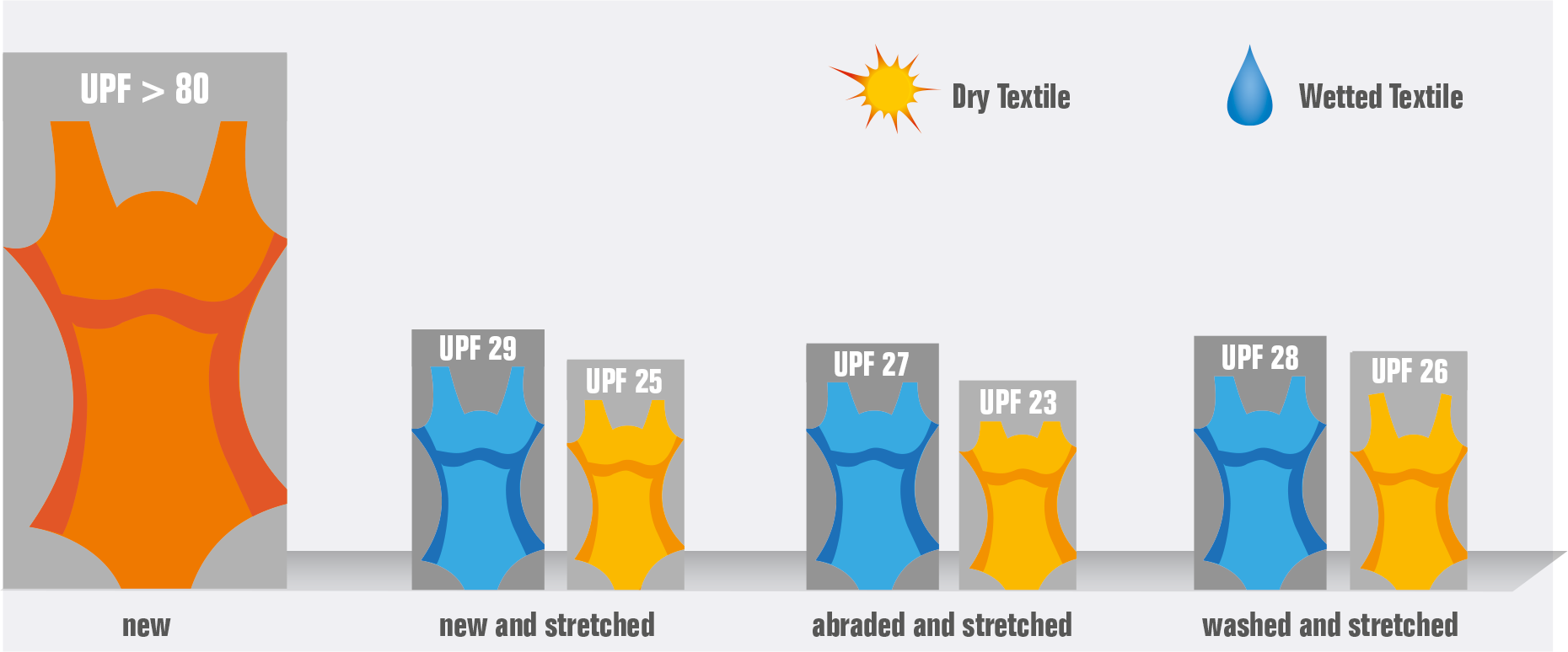
What is UV STANDARD 801? Recently, we've been frequently asked by our customers whether our UV protective clothing is certified according to UV STANDARD 801. UV STANDARD 801 was developed by an international testing consortium from Germany, Austria, and Switzerland. Certification for UV STANDARD 801 is awarded in UPF levels of 10, 15, 20, 30, 40, 60, or 80 and, like the Australian-New Zealand standard, is measured on January 1st in Melbourne with the most sensitive skin type as the wearer. The UPF is determined using a procedure that simulates the most unfavorable wearing conditions. The textile material is first washed, then moistened during the measurement and stretched in a specified manner. A garment with UV Standard 801 and a UPF of 20 can thus offer longer protection than a garment certified to AS/NZ 4399 or AATCC 183 with a UPF of 50+ that is a year old and worn under sporting conditions. However, even with UV Standard 801, a UPF of 80 can only be achieved with a new product. For illustration, here is a graphic for UV Standard 801 showing different fabric conditions and sun protection factors: https://www.uvstandard801.com/fileadmin/user_upload/UV_801/Images/uv_badeanzug_grafik_website_neu_2.jpg
What we do at INASKA
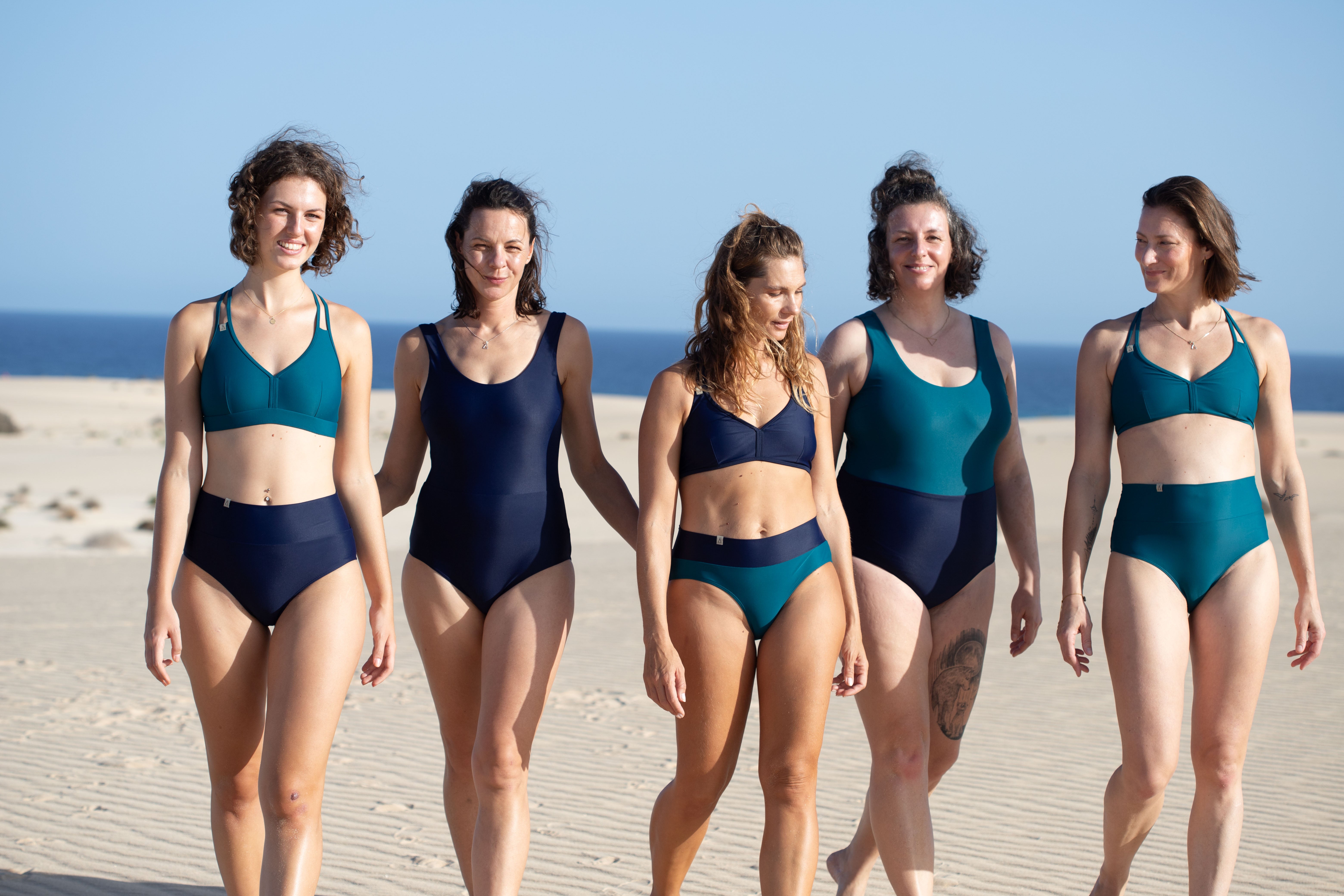
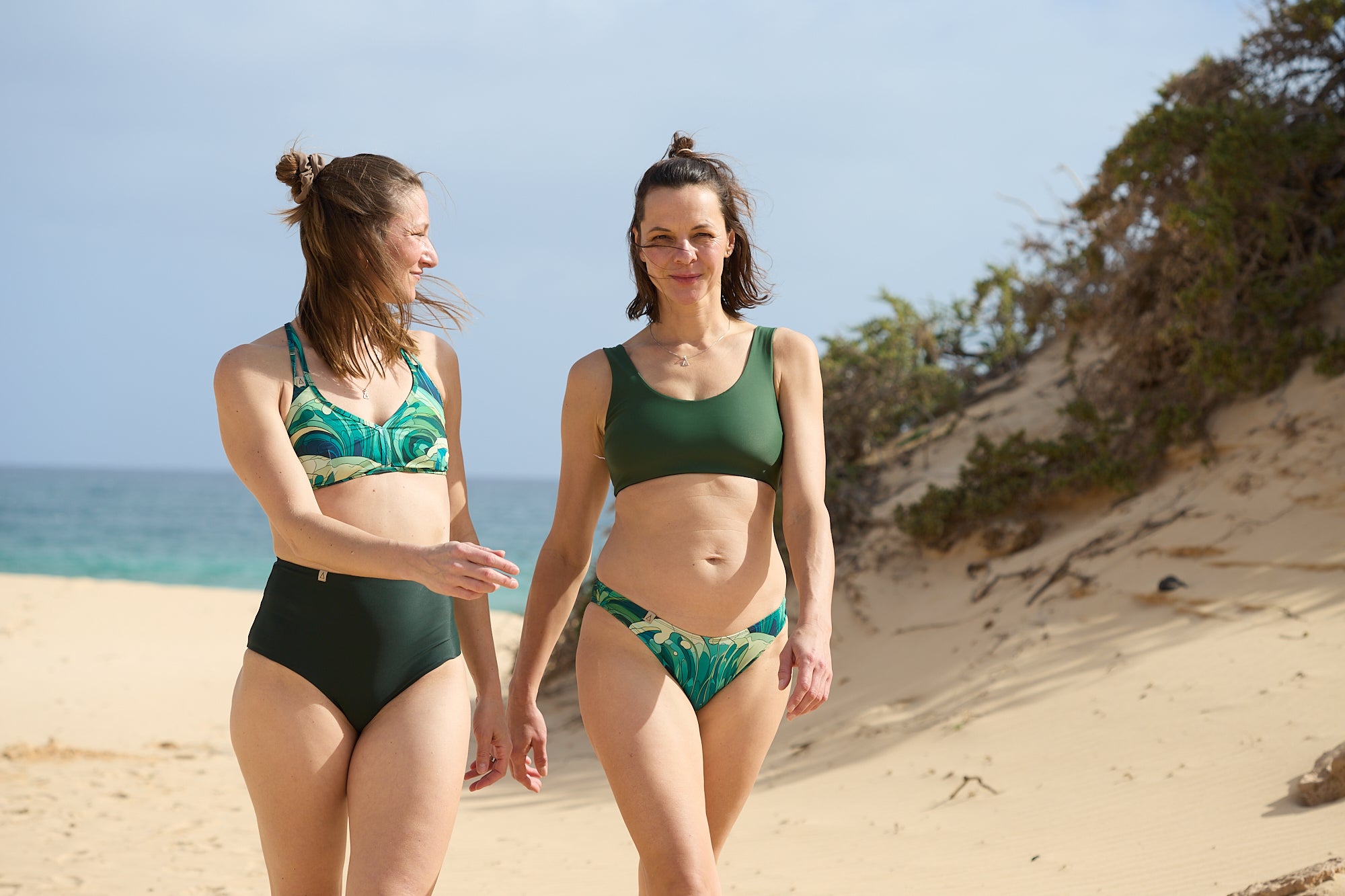
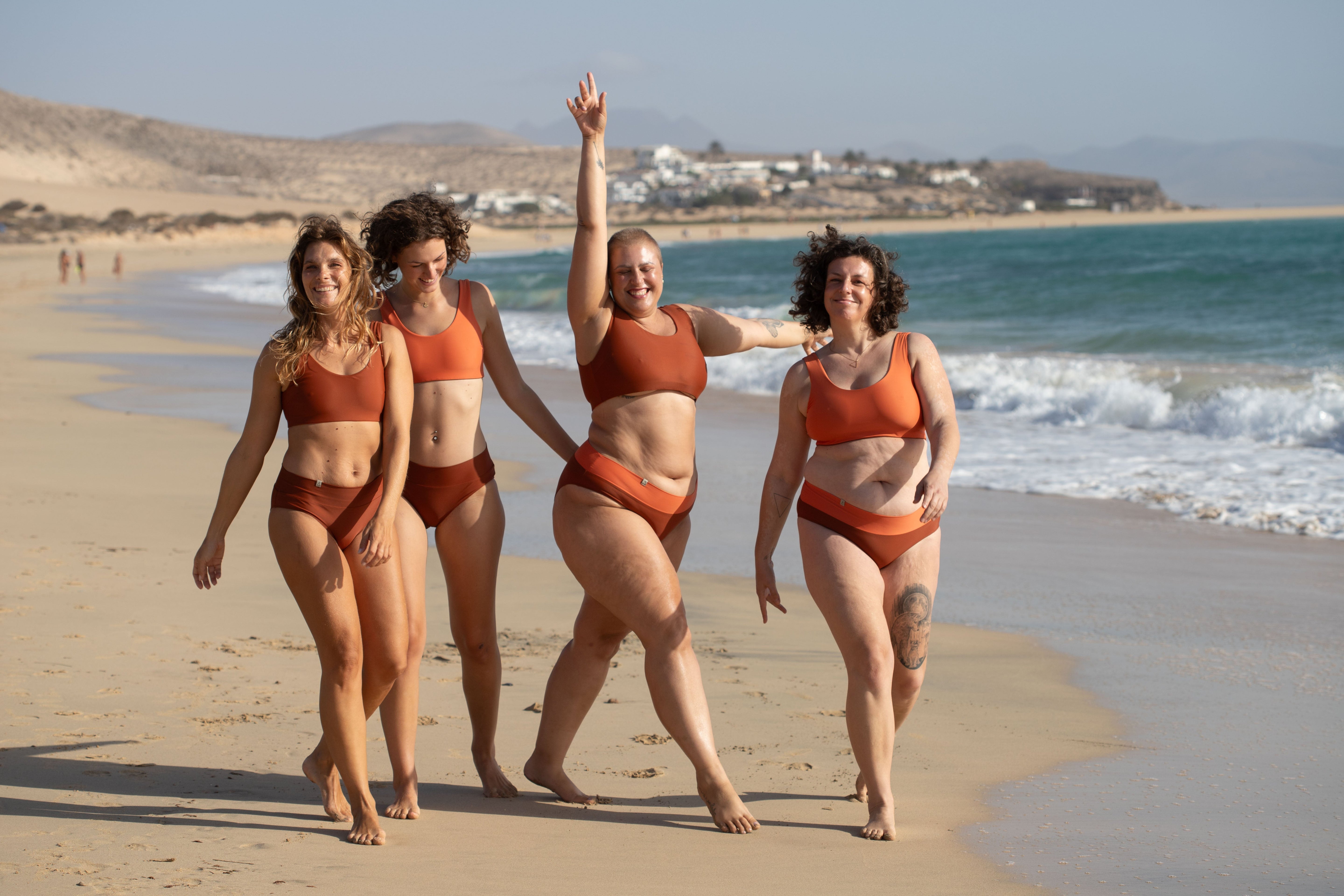
Our Swim-Play collection, available in many sizes, as well as our leggings and cycling shorts, are made from Carvico 390 Vita fabric. This fabric offers a UV protection factor (UPF) of 50+ and is certified according to the Australian/New Zealand Standard (AS/NZS 4399), the European Standard (EN-13758-1), and the American Standard (AATCC 183). Various independent bodies confirm that everything meets the highest standards. So you can enjoy your next beach vacation or camping trip without worry. We have applied for certification according to UV STANDARD 801, but have decided against pursuing this additional certification for the time being. This would require us to have each color tested separately, which would also entail a significant financial investment.
We have great confidence in the UV protection pioneers from New Zealand and Australia, who, due to their location near the southern ozone hole, are confronted with this issue daily, both in summer and winter. Furthermore, we advocate the approach of not completely relinquishing responsibility for one's own body to clothing or sunscreen. The sun exposure time calculated by UPF or SPF depends significantly on one's individual skin type and sun sensitivity. The skin's natural protection time is an approximate indicator and can also vary depending on the day. Calculated sun exposure times provide a guideline for maximum comfort and heat protection outdoors worldwide. Common sense should also be used to ensure your body is protected. After all, we shouldn't rely 100% on our period calculations during sex.
Buy your swimwear without a guilty conscience
At INASKA, you can buy your swimwear , such as bikini tops and bottoms or swimsuits , with a clear conscience, as we meet the highest standards for UV protection. We want you to feel safe and comfortable in our products and enjoy protection for years to come. That's why we place great importance on the certification of our textiles and are constantly working to improve our products. With our Swim-Play collection made from recycled materials, we offer you high UV protection and an environmentally friendly and sustainable approach . This way, you can not only protect your health but also contribute to protecting our environment. Feel free to contact our customer service if you would like more details about our commitment or need information about our bikini bottoms , cycling shorts, statement hoodies , or leggings.



Leave a comment
All comments are moderated before being published.
This site is protected by hCaptcha and the hCaptcha Privacy Policy and Terms of Service apply.